Why a Room Feels Different When the Light Moves
Learn how moving daylight changes room colours and surfaces, so you can observe the space at useful times before settling on its arrangement.
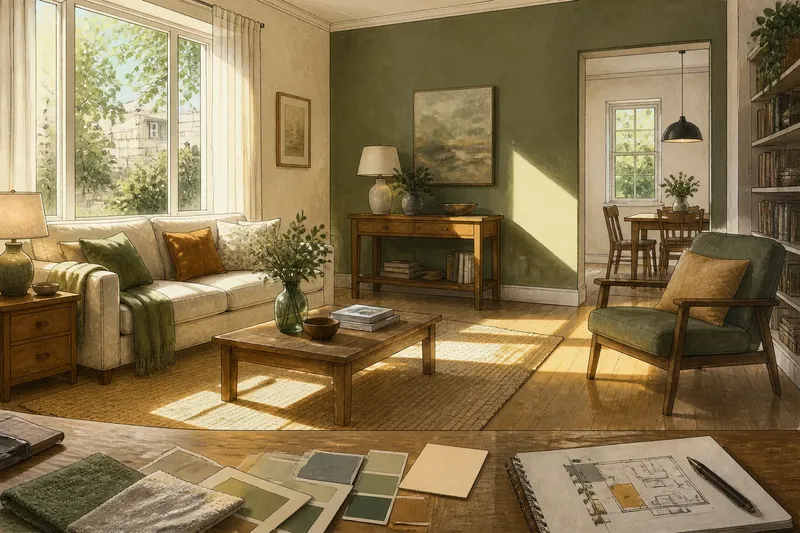
Daylight can make the same room feel warm and welcoming in the morning, then cool and flat by late afternoon. To understand why a room feels different when the light moves, look at the direction, softness and changing position of daylight before deciding where colours, artwork or furniture belong.
Why does daylight change a room’s colours?
Daylight carries different qualities as it enters from different directions and shifts across the sky. A painted wall is not a fixed patch of colour in every condition: its appearance depends on the light reaching it, the surface texture and the colours nearby.
Direct sun can make a hue appear brighter and bring out warm undertones. Indirect light, bounced from the sky or another surface, is often gentler and can make the same paint seem quieter. A north-facing room, for instance, may receive cooler, steadier light, while a room facing south can have stronger patches of sun. Buildings, trees and neighbouring walls also alter what reaches the window.
Glossy finishes reflect distinct highlights, while matt paint tends to scatter light more evenly. A textured plaster wall may show small changes in shadow as the sun moves; a smooth wall can look more uniform. Neither is simply better. The useful question is whether the shifting appearance suits the room’s purpose.
How does light direction affect a room?
Light direction changes both brightness and the way objects cast shadows. Light arriving from the side can reveal the grain of a wooden floor or the weave of a sofa, while light facing a surface more directly can make its texture less obvious.
Watch where the brightest area falls. A shaft of morning sun might reach a dining table but leave the reading chair in soft shade. Later, the lit patch may cross the floor and land on a wall. This movement can make a room seem to change shape, even though its boundaries stay put.
Reflected light matters too. A pale wall opposite a window can bounce brightness back into the room; a dark rug or deep-coloured sofa may absorb more of it. A mirror can redirect a bright view, but its position also affects glare and what it reflects. Check the result from the places where you actually sit, eat or work.
What does soft light change?
Soft light blurs the edge between bright and shaded areas. It can make a room feel more even, with fewer sharp contrasts, and can help subtle colours read clearly across a larger surface. Cloud, a sheer covering or a window looking onto a shaded garden may all soften daylight, though each produces a different effect.
Hard sunlight does the opposite: it creates distinct bright spots and crisp shadows. That contrast can add energy and reveal surface detail, but it may also make a pale wall look glaring or a dark corner seem heavier. Notice whether the room’s most important activity happens in the sun patch or beside it.
For an honest comparison, observe the same wall and furnishing from the same spot. Looking at a colour while standing in a sunbeam, then comparing it from a shaded doorway, can make the difference seem greater than it is across the room.
When should you observe a room?
Check the room at the times you use it, rather than relying on one bright viewing. Morning, midday and late afternoon can reveal different patterns, especially where sunlight reaches indoors. Overcast conditions are useful too: they show how the room looks without a strong beam dominating the view.
Notice the season as well as the hour. The sun’s path shifts during the year, and leafy branches can cast a different pattern from bare ones. You do not need a formal log. A few brief observations, written beside a simple room sketch, can help you remember where light falls and when.
Say you are choosing between two walls for a reading chair. Imagine one wall receives a bright patch during the hours you usually read, while the other stays softly lit. Sitting in both positions at those times could show which offers a comfortable view of the page and avoids glare on a screen. The result is an informed choice, not a prediction that every day will look the same.
How can you check before arranging?
Use temporary, ordinary objects to see how a proposed arrangement interacts with moving light. A white sheet of paper can reveal a bright reflection; a cushion or fabric sample can show whether its colour shifts noticeably. These are observation aids, not exact substitutes for the finished item, whose texture and finish may differ.
- Stand at the room’s entrance and note the brightest area at the time you usually arrive.
- Look at the main wall from the seat where you expect to spend time.
- Place a paint or fabric sample beside the existing floor and furnishings, then revisit it in different daylight.
- Check for glare on a screen, glossy tabletop or framed glass from normal sitting positions.
- Notice whether a tall object would cast a shadow across a task surface as the light shifts.
- Compare the room on a bright day and a cloudy day before treating one appearance as typical.
If you use samples, keep them close to the surface they are meant to complement. A small swatch viewed in isolation can seem unlike the same colour beside timber, stone or upholstery.
Which questions help you decide?
Does north-facing light always look cold?
No: the apparent warmth also depends on neighbouring colours, surface finishes and what is visible outside. Look at the room itself through the day rather than judging it by its compass direction alone.
Why does paint look different on each wall?
Walls receive light from different angles and may reflect different surroundings. A sample on one wall therefore cannot show exactly how the colour will read across the whole room.
Should furniture face the brightest window?
Not necessarily; a direct view towards a bright window can cause glare, while a side-lit position may be easier for reading or screen use. Try the likely seating position at the hours you will use it.
Can artificial light settle the decision?
It can help you judge the room after dark, but it cannot show how daylight will alter a surface. Assess the two conditions separately, especially if the room’s colours are central to your choice.
How does observation guide arrangement?
Think of daylight as a moving feature of the room, not a single fixed quality. Put tasks where the available light works for them, and consider whether a focal point should catch a bright patch or remain easy to see in softer conditions. A change in position may matter more than changing a colour.
Before settling the arrangement, revisit the space from its usual viewpoints at the times that matter to you. A room’s appearance will still vary with weather and season, but knowing where its light travels gives you a clearer basis for choosing where to sit, display a surface or place a favourite object.