How Sideboards Became Both Storage and Display
Explore how sideboards came to combine serving, storage and display, with practical clues for choosing what to keep inside and on the surface.
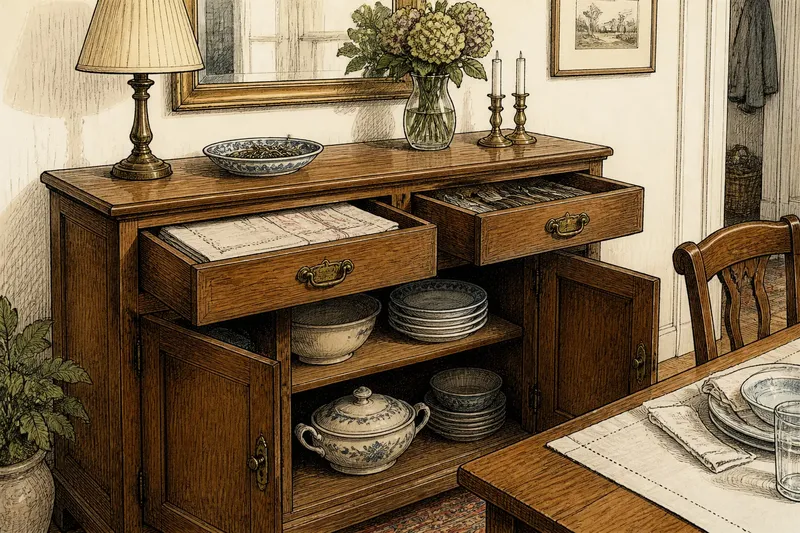
A sideboard’s history is easiest to read in its shape: a broad working top above cupboards and drawers. The word is commonly linked to a board set beside a dining table, though furniture terminology and forms have varied across places and periods.
Serving Beside The Table
A separate surface near the dining table offers a straightforward use: dishes and serving equipment can wait there instead of crowding the meal. Early pieces associated with this role could be simple stands or tables, but it is difficult to describe one universal starting form for a kind of furniture that changed across households and regions.
Over time, the familiar sideboard form brought storage beneath the top. That pairing made it useful for keeping tableware close by while leaving a surface available for serving. The form did not replace its practical purpose; it gave that purpose more places to go.
Drawers And Cupboards
Drawers and cupboards make a sideboard useful beyond the meal itself. Shallow drawers can suit napkins or serving tools, while deeper compartments may accommodate bowls and dishes. These are practical possibilities, not fixed rules: a piece may have been altered, and a modern design may borrow traditional details for appearance.
Inspect the interior before assigning a job to the furniture. The drawer depth, cupboard opening and shelf height reveal what will fit more reliably than a seller’s description or the piece’s decorative style.
Keep frequently used items in the easiest-to-reach compartment.
Display On Top
A sideboard’s top can also present objects chosen for the room. A lamp, framed picture, bowl or candlesticks may turn a practical piece into a visual anchor. A mirror above it can extend the arrangement, while a plain wall can keep attention on the objects and furniture.
Display need not crowd out use. Leave a clear patch for setting down a tray, post or serving dish, and keep objects that could be knocked over away from busy edges.
Imagine inheriting a narrow sideboard with a large central cupboard and two shallow drawers. You place table linen in the drawers, keep everyday serving bowls in the cupboard, and leave the top mostly clear apart from a lamp and a dish for keys. The result is a piece that stores useful items while still serving the room; the trade-off is that the cupboard is no longer available for other belongings.
Use Beyond Dining
Household routines differ, so a sideboard need not stay in a dining room. In a hall, its top might hold keys and post; in a living room, the cupboards could store games or books. In a home office, it may keep supplies out of sight, provided its depth and door swing fit the available space.
Before placing one, check that drawers and doors can open without striking chairs or blocking a route through the room. Consider the top’s depth, too: a piece that looks compact against a wall may still project into a walkway.
Choosing Materials
Material and finish affect how a sideboard suits everyday use. A polished wooden surface may show marks more readily than a textured one; glass and stone need care appropriate to their surfaces. For an older or delicate piece, avoid placing heavy objects on areas that look weak, and use protective pads beneath items that might scratch or stain.
When choosing a sideboard, match the storage to the things you actually plan to keep. Check the compartments and the available top space before deciding whether it will work for the room.
Sideboard Questions?
What is a sideboard used for?
A sideboard combines a top surface with storage, often for tableware and linen near a dining area. It can also serve as low storage in a hall, living room or office.
Is a sideboard the same as a buffet?
The terms overlap in everyday use, and their meanings vary among sellers and regions. Both often describe low furniture with a top and storage, so inspect the piece rather than relying on its label.
What should go on top of a sideboard?
Choose objects that suit the room, such as a lamp, bowl or framed picture, while leaving some usable space. Keep fragile items clear of spots where people regularly set down bags or dishes.
Can a sideboard be used outside the dining room?
Yes. Its storage and broad top can suit other rooms if the piece fits the space and its contents are useful there.
The phrase sideboard history and storage describes a change in emphasis rather than a neat replacement of one purpose by another. When arranging one, decide first what needs to stay within reach, then use the remaining surface for display.