A Winter Entryway Ready for Wet Coats and Boots
Plan a winter entryway for wet coats and boots with clear drop-off zones, easier-to-find daily essentials and a straightforward route through the door.
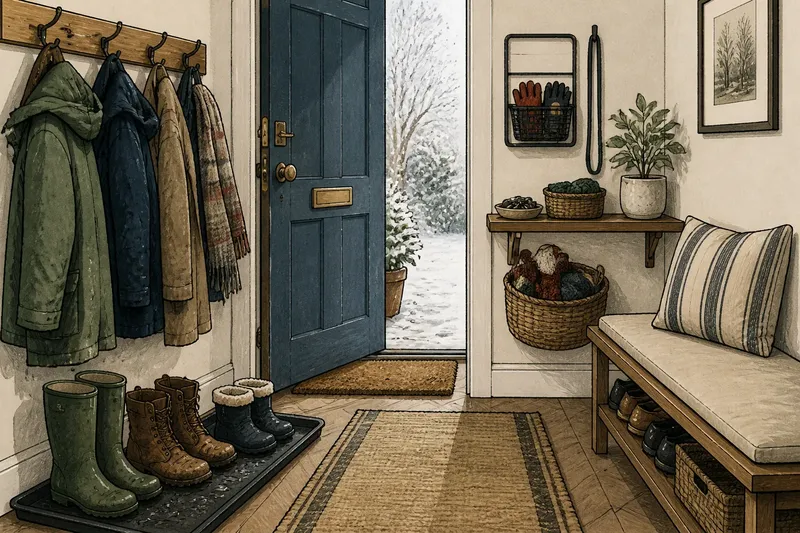
A winter entryway works better when wet coats and boots have somewhere to land before they meet the rest of the home. A little seasonal planning can keep that damp arrival contained while leaving keys, bags and everyday footwear easy to find.
1. Trace the arrival route
Start by watching how people actually come in. Which hand carries a shopping bag? Where does someone pause to take off a boot? Does the door swing towards a wall, a cupboard or the hall? These details reveal where a drop-off zone can sit without turning the entrance into an obstacle course.
Keep a clear route from the threshold to the next room. A tray, basket or coat stand should not force anyone to twist around a door or step over shoes. In a narrow hall, a slim wall hook or a short row of pegs may be more useful than a freestanding rack; in a wider entrance, a bench can give boots a place to be removed without blocking the passage.
Say your household enters through a door that opens beside a radiator, and a tall coat stand currently occupies the other side of the hall. Imagine moving the stand closer to the door but outside its swing, then placing a boot tray beneath it. The expected visible result is a direct path indoors, with coats and damp footwear gathered near the entrance rather than scattered down the hall.
Mark the door’s swing and the walking route before choosing furniture.
2. Give damp gear its own zone
Wet outerwear needs a distinct stopping place, not a vague instruction to “put things away”. A sturdy row of hooks above a boot tray makes the intended destination obvious. If several people share the entrance, keep hooks at reachable heights and leave space between bulky coats so sleeves do not drag across the floor.
Separate items that are wet from those that are ready to wear. A breathable basket can hold hats and gloves once they are dry; it should not become a heap for soggy scarves. Damp pieces need room to air, so avoid packing them into a closed cupboard or covering them with another coat. A washable mat beneath the hanging area can catch drips and muddy marks.
Choose the arrangement to suit the space and the material. A boot tray contains water and grit; a washable runner can protect a longer stretch of floor; a wall-mounted rail leaves floor space open. For a shared entrance, labels or distinct hooks can help keep each person’s wet gear in the right place without requiring a large storage unit.
Keep the wet zone close to the door, but outside the main walking line.
3. Sort boots by use
Winter footwear often arrives in a jumble: muddy walking boots, everyday shoes, slippers and spare pairs. Give the frequently worn pair the easiest position to reach. Less-used footwear can sit further along the wall, on a lower shelf or in a cupboard, provided there is enough space for it to dry before storage.
A boot tray is useful when it has room for the footwear that genuinely comes through the door. If it is too small, pairs spill onto the floor; if it is oversized, it can narrow the hall. A shallow tray with a raised edge may suit a compact entrance, while a rack can lift shoes from standing water. Pick a surface that is straightforward to wipe or rinse.
Keep a clear distinction between drying and long-term storage. Wet boots should not be pushed directly into a closed shoe cabinet, where moisture and grit can linger. Once they are dry, return them to their usual shelf or cupboard. That small reset keeps the drop-off area available for the next arrival.
Leave the most-used pair where it can be reached without moving another one.
4. Make daily essentials visible
Keys, travel cards, gloves and the lead for a dog are easy to misplace when every surface becomes a temporary landing pad. Give these small essentials a defined home near the exit: a shallow dish on a stable shelf, a wall pocket or a small basket. Keep the container visible and open enough for a quick glance.
Separate clean, ready-to-go accessories from items waiting to dry. A glove basket beside wet coats can collect damp pairs and make the dry ones hard to spot. Instead, reserve a dry container for accessories that are ready to use, and hang damp pieces separately with room around them. If space is tight, a few labelled compartments can distinguish keys from gloves without adding another bulky unit.
Consider what must be reached on the way out and what can live elsewhere. A shopping bag used most days belongs near the door, while spare batteries or occasional-use tools do not. Keeping only departure essentials in the entryway helps the useful surface remain clear.
5. Use height and boundaries
In a small entrance, floor space is precious. Wall hooks, a narrow shelf or a rail can keep coats and small items off the ground, while a low tray deals with boots. Make sure hanging sleeves do not cover a light switch, obscure a door handle or sweep across a bench seat.
In a larger hall, furniture can define separate functions without building a barrier. A bench beside the boot tray creates a place to sit; a hook rail beyond it gives coats a separate landing point. Leave enough room for someone to use the bench while another person passes through. The arrangement should make the next action obvious, not create a queue at the door.
Use a mat or tray as a visual boundary for wet footwear. If the entrance opens directly into a living area, a washable runner can mark the route from the door while a smaller boot tray keeps the mess concentrated at the threshold. Keep colours and textures simple enough that damp items remain easy to spot against them.
Use vertical storage for light items, and reserve the floor for footwear and the walking route.
6. Choose surfaces for winter
Winter brings water, grit and muddy marks indoors, so entryway materials should be easy to maintain. A washable mat, wipe-clean tray and smooth shelf are generally simpler to care for than a delicate surface that needs careful handling. A basket made from a material that tolerates ordinary household use can corral dry accessories, but it is not a substitute for airing wet clothing.
Think about where drips will go. A tray with a raised lip can contain water from boots; a mat can catch loose grit before it travels. Avoid leaving damp items against painted walls or timber furniture if they could mark the finish. Follow the relevant care instructions for floor coverings and furniture, and check product labels where they affect cleaning or use.
Keep a cloth or small brush in a nearby cupboard if it helps with ordinary tidying, but do not let cleaning supplies crowd the drop-off zone. The aim is a surface that can be cleared without shifting a tower of shoes first.
7. Reset the arrangement
A seasonal setup needs a simple routine to stay useful. When coats are dry, return them to their usual hooks or cupboard. Empty grit from the boot tray when needed, move dry footwear back to storage, and restore keys and accessories to their assigned container. These small actions keep the next arrival from inheriting the previous one’s clutter.
Make the reset easy to remember by linking it to a familiar moment, such as taking off outdoor shoes or putting away the shopping. If a hook or basket repeatedly fills with the wrong things, change its location or purpose rather than adding another container. The best arrangement is one that fits the habits already happening at the door.
During winter, review the entryway when the weather or household routine changes. A pair of muddy boots may need a more accessible spot; an extra coat may call for another hook. Keep the route clear and the everyday essentials visible, and the winter entryway will be ready for wet coats and boots without asking the rest of the home to absorb the mess.